DOCS / 01
How the system works
Connect a phone or laptop to Wi-Fi. The router first waits for approval of the new device. It then applies the rules of the assigned zone: some connections are allowed, others are stopped.
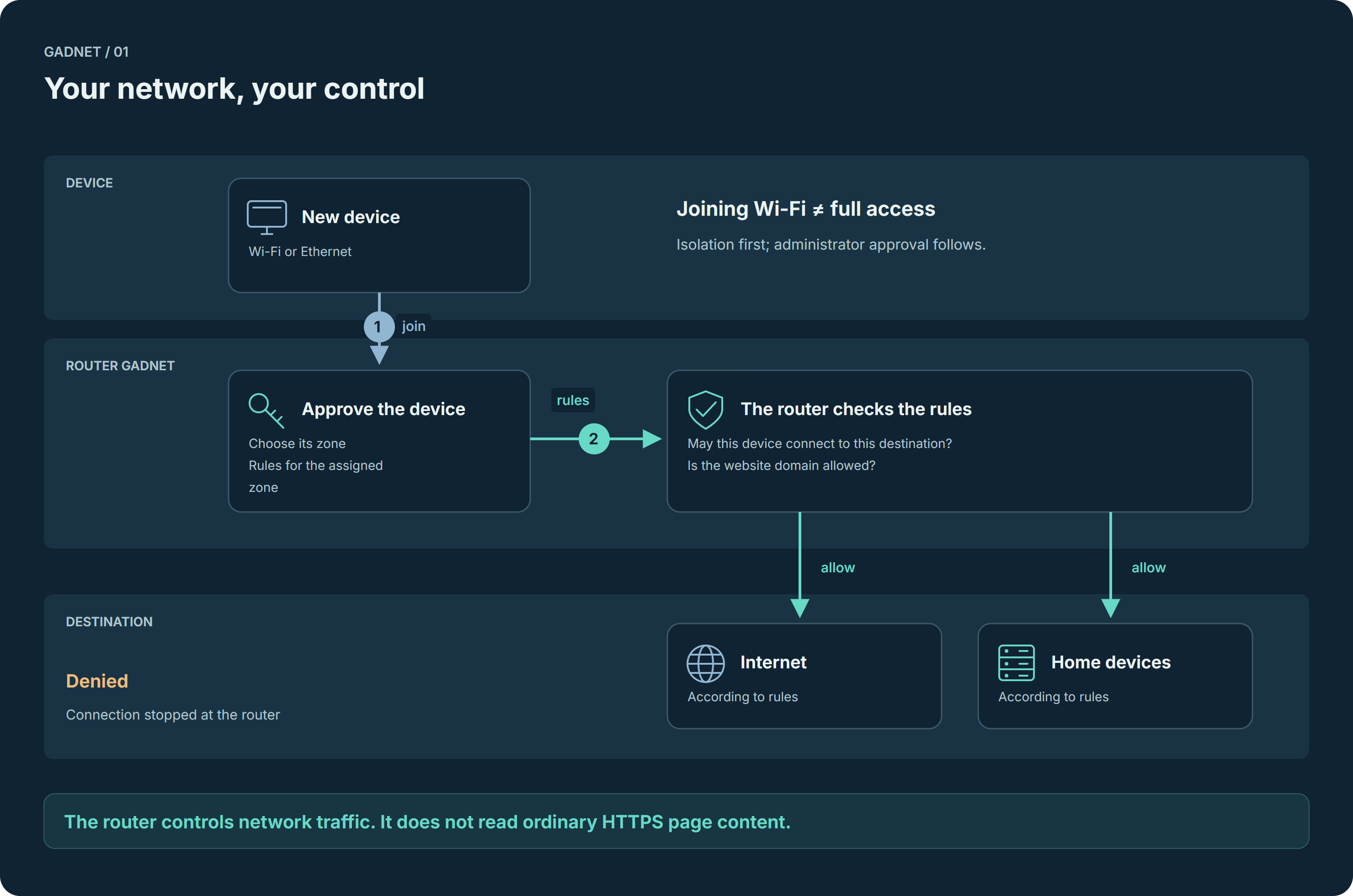
a guest phone uses internet access in its own zone. The administrator assigns devices to zones and configures permitted directions.
What happens technically
Join the network
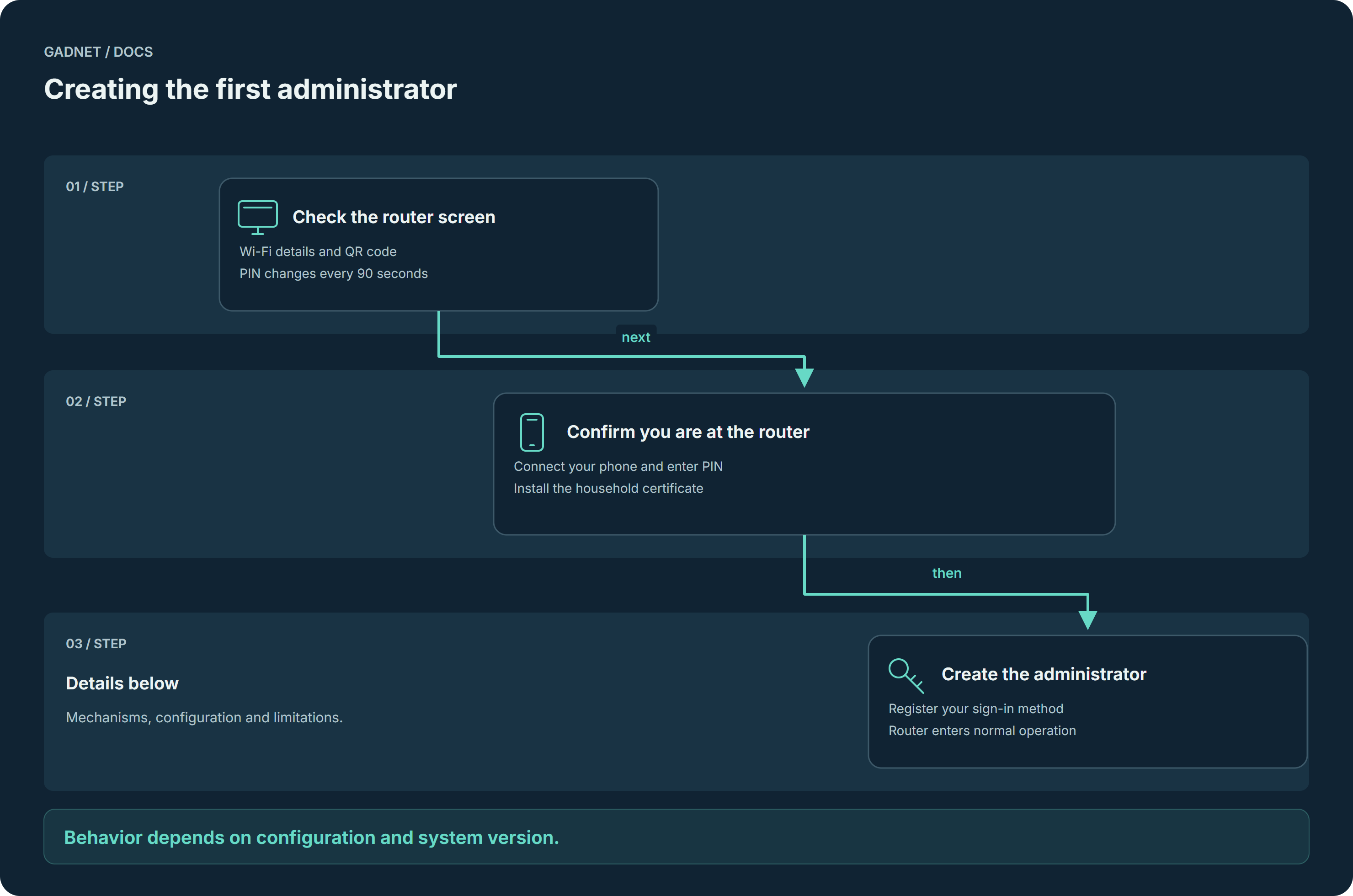
New devices enter Isolation. Administrator approval assigns a zone and appropriate permissions.
Assign access
The administrator approves a device and assigns a zone. The system distinguishes physical MAC hosts from mTLS certificate identities. Each zone controls permitted traffic flows.
Enforce rules
The native nftables firewall controls L3/L4 traffic; CAKE SQM active queue management eliminates bufferbloat on WAN; the DNS resolver applies configured profiles and lists.
Terms and mechanisms
- Zone
- A group of devices with shared access rules: Admin, Trusted, Guest, IoT or Isolation. The administrator chooses permitted communication directions and approves devices waiting in quarantine.
- Firewall
- Native nftables firewall (Linux kernel) enforces L3/L4 rules. CAKE SQM active queue management eliminates bufferbloat on WAN, and Client Isolation can be enabled for guests and IoT.
- DNS
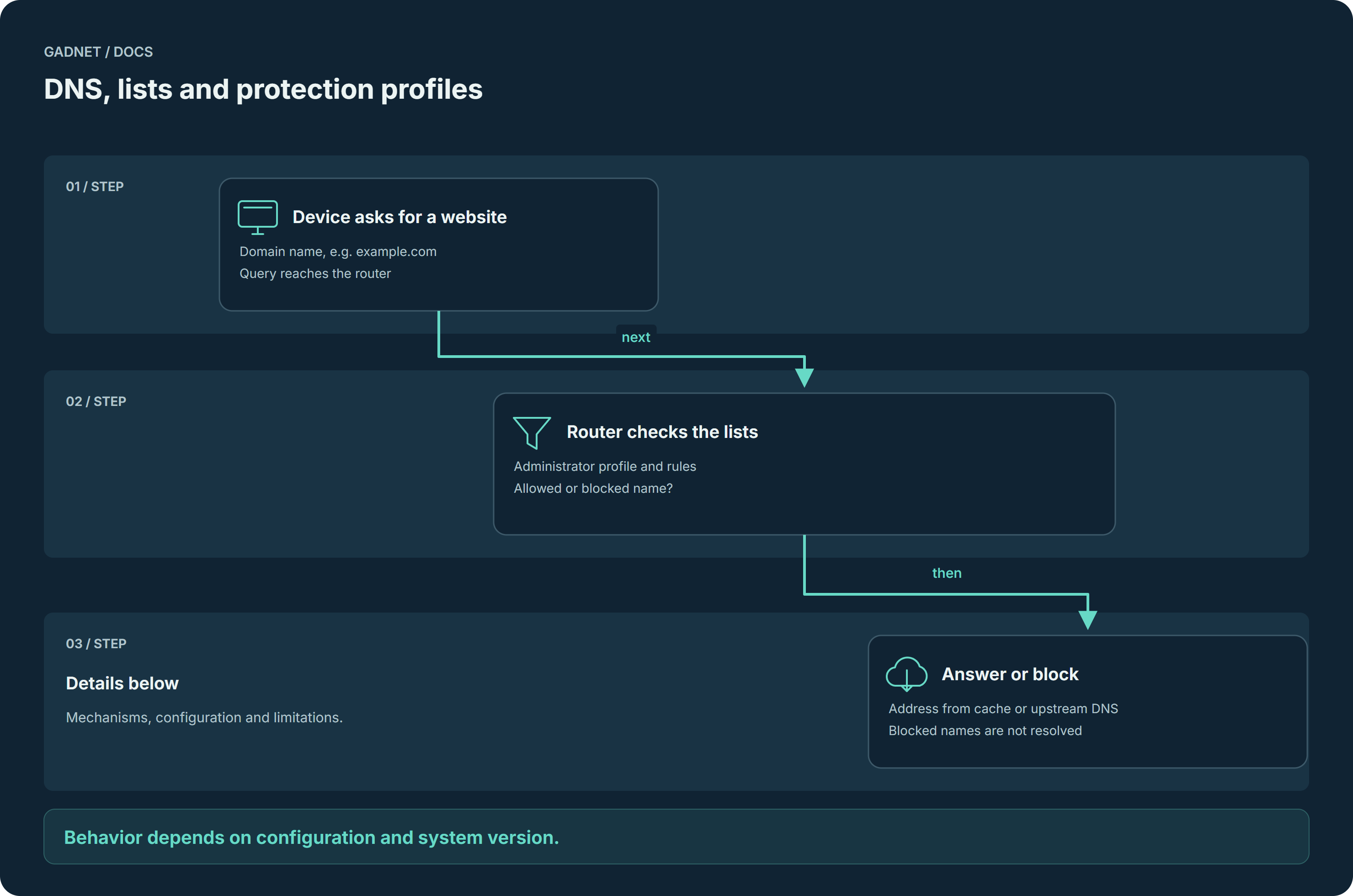
- Unbound validates DNSSEC for signed domains and encrypts upstream queries through DoT. Enabled RPZ lists, including CERT Polska and OpenPhish, block the selected domains.
- HTTPS
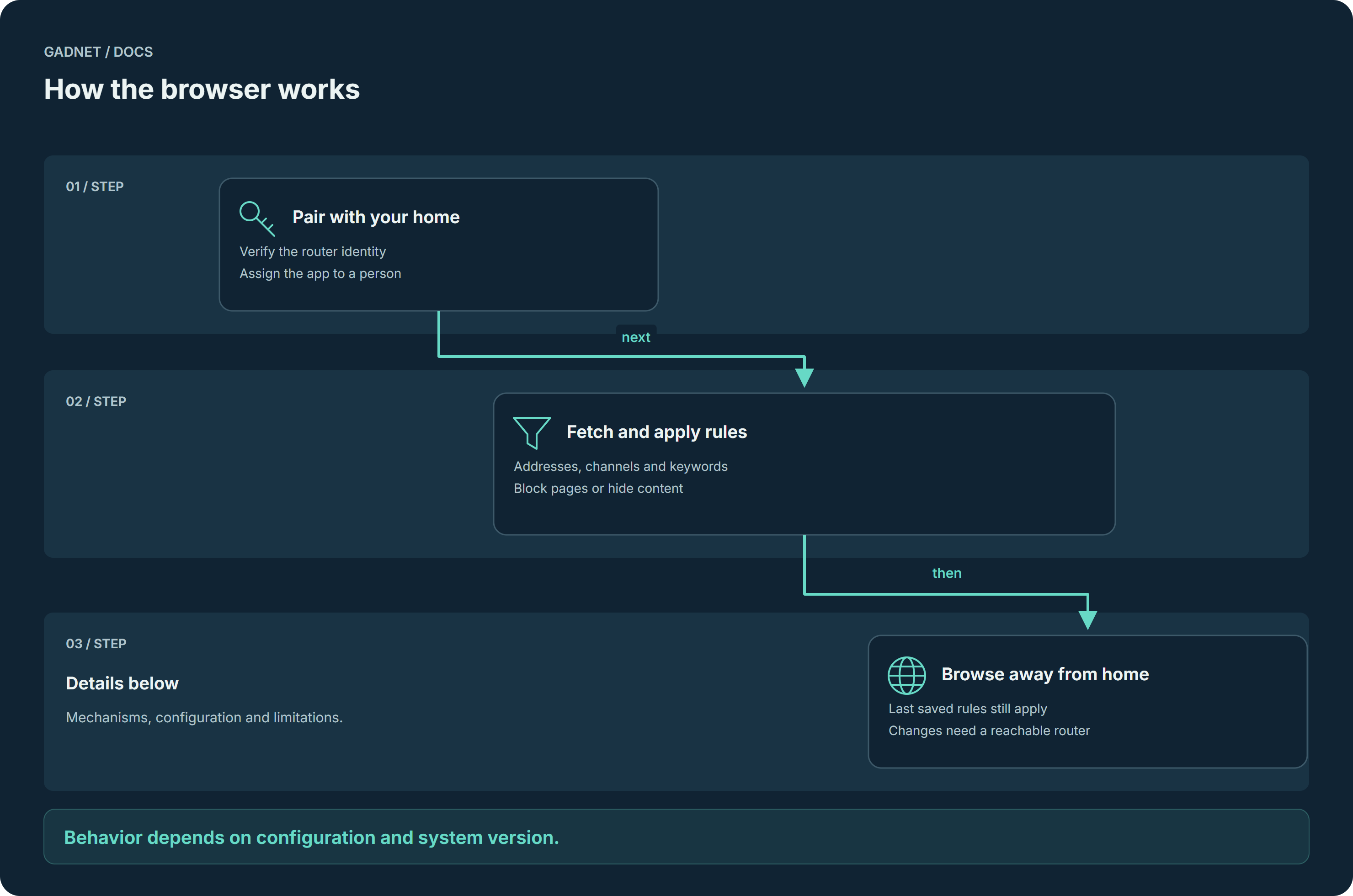
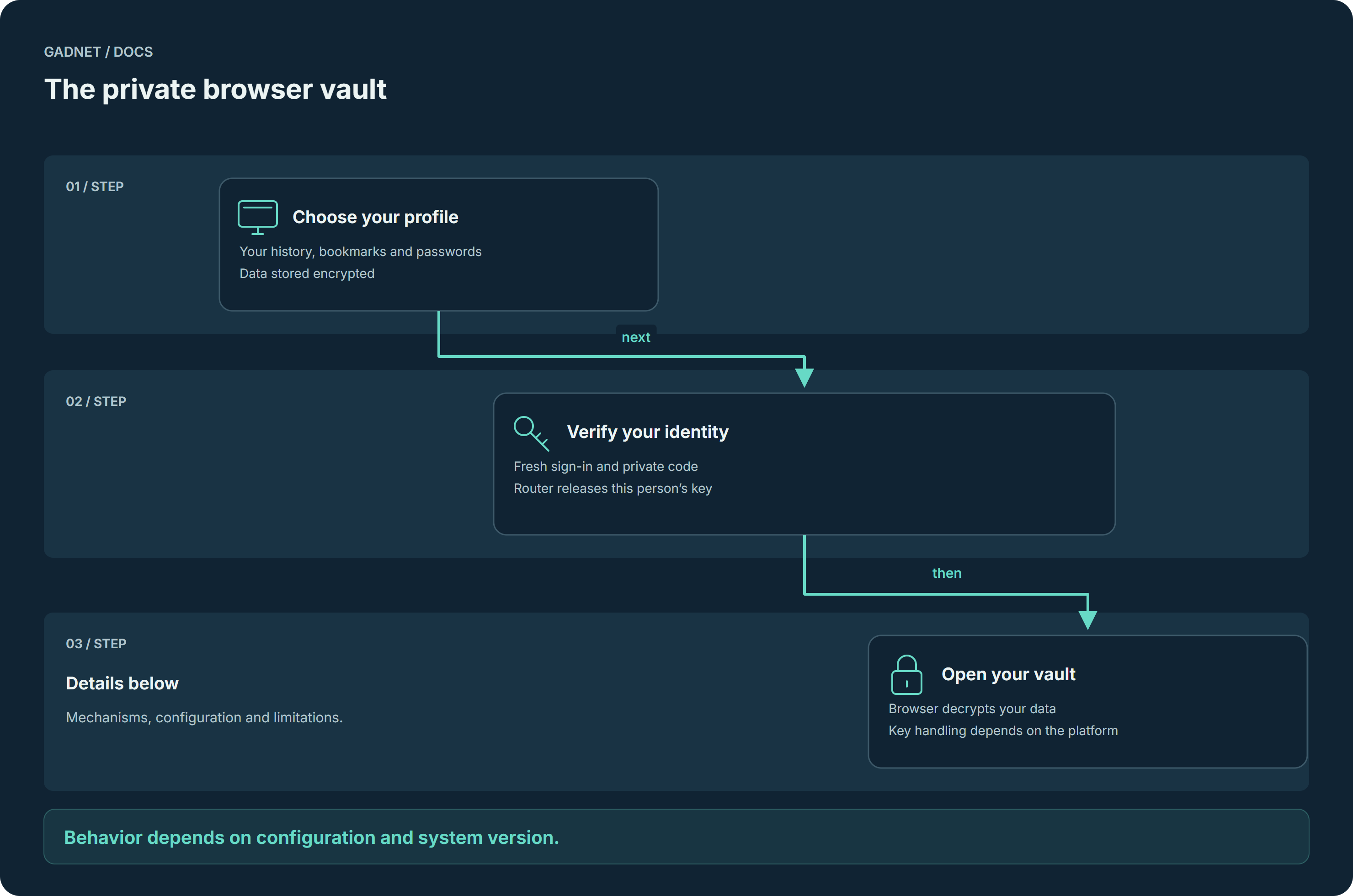
- HTTPS encrypts the browser-to-website connection. GADNET Browser applies content rules during browsing, while router policies control domains and connections.
Scope and limitations
Zones organize device access. The administrator chooses permitted directions, and client isolation adds controls within a zone. CAKE SQM helps manage WAN queues. Website HTTPS remains encrypted between the browser and server.